
Kingman County Deed Chain Sources
Start any ownership history with the parcel's exact legal description. That key comes from the Kingman County Appraiser. The county tax search returns it too. Once you have the description, deeds carry the story forward. Each recorded conveyance names the buyer and seller of record. Plats fill another gap, showing how lot language shifted over time. Coverage varies by record group. No single source pins a tidy year range to all of them. So state what each set actually holds.
| Source | Verified depth | Custodian | Chain use |
|---|---|---|---|
| Deed indexes and instruments | No online cutoff verified | Register of Deeds | Parties, instrument type, tract, recording reference |
| Deed books or office images | First volume not verified | Register of Deeds | Older grantor and grantee links |
| Recorded plats | Catalog depth not verified | Register of Deeds; official city copy when held | Additions, lots, blocks, replats, vacations |
| Newspaper microfilm | 1884 to present | Kingman Public Library | Names and dates that lead back to official records |
Work backward from the newest deed. A library can supply likely names, dates, additions, or estate notices when an index trail thins out. A newspaper mention, though, never replaces the recorded deed itself.
Kingman County Index Stays Offline
Deeds, mortgages, releases, plats, tax liens, and powers of attorney all pass through the Kingman County Register of Deeds, the office charged with filing and safekeeping land records. The county offers no online grantor-grantee index. Former-owner research in Kingman County therefore means a courthouse visit or a precise copy request. The official office page shows the record scope and the direct contact route:
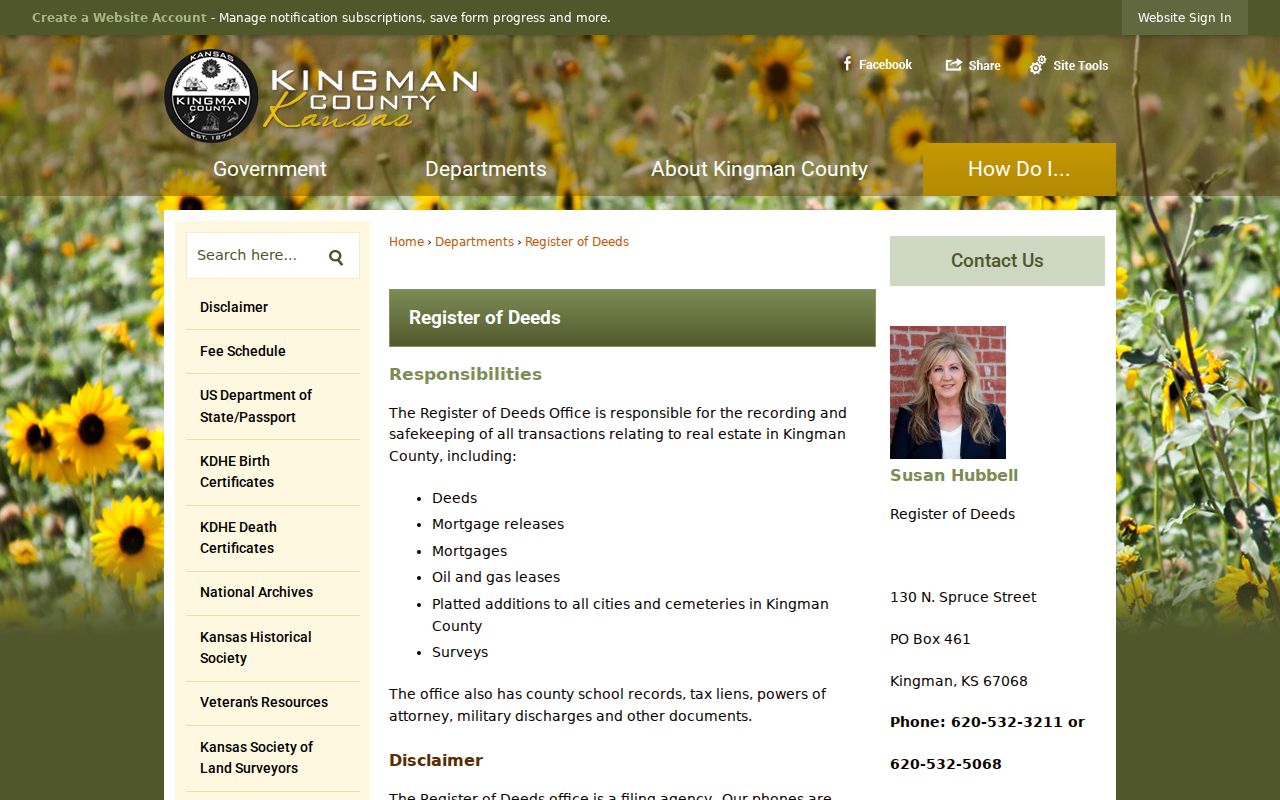
The page confirms the Register files and preserves instruments. Give the office the parties, the instrument type, a volume and page or recording number, and the tract. Request one identified record rather than a broad report on every past owner.
Kingman City and Rural Chains
City property in Kingman County records by lot, block, and addition. Rural land rides on section, township, and range. A street address can change or cover several tracts. The recorded description holds steady, so carry it through every row of your deed chain. The tax selector keeps labels like Hillside Add, Replat, Norwich, Supp. Plat, and refrontage. Those exact strings can open an older search. Yet only the recorded plat or deed proves the tract.
Zenda's Former-Owner Alias Trail
One more wrinkle sits in the tax selector. It lists "New Rochester (AKA Zenda)" along with north and south additions under the Rochester name. Run both forms when an old instrument or notice carries a place name that no longer matches today's label. Keep the results separate. A shared name still proves nothing about shared land. Confirm lot, block, addition, and book and page. Treat the dropdown as a vocabulary clue, not a certified history of name changes.
Estate Deeds in Kingman County
Probate can split a simple chain in two. Court orders may name heirs or a personal representative. A later executor, administrator, beneficiary, or trustee deed then carries the interest into the land record. You may need both layers to connect the owner of record across generations. Kansas vital certificates carry direct-interest limits. For property questions, rely on the district-court file and the recorded conveyance. Seek a vital copy only when you are legally eligible and it truly matters.
Walk Kingman County Deeds Backward
A grantor gives up an interest. A grantee receives it. To rebuild the list of previous owners, locate the deed where the current owner appears as grantee, then hunt that deed's grantor as grantee in the next earlier link. Never lose sight of the tract itself.
- Locate the current parcel and copy its ID and complete legal description.
- Obtain the newest deed and record its date, parties, type, and reference.
- Take its grantor and locate that party's earlier acquisition of the same tract.
- Repeat, checking correction, estate, court, and plat records when the chain stops.
- Mark every source date and unresolved gap.
- Grantor
- The party conveying an interest.
- Grantee
- The party receiving an interest.
- Chain of title
- The linked sequence of recorded instruments.
- Legal description
- The land description used to hold the chain to one tract.
When a name or description looks off, search forward too. The county FAQ states an old deed cannot simply be changed; a new deed is required. A correction may therefore sit in the records as a later instrument.
Kingman Library Ownership Leads
Old leads often live in the library. The county history page points to newspaper microfilm at Kingman Public Library from 1884 to the present. It also lists genealogy books and Kansas census material. Sale notices, estate notices, and subdivision reports can surface an older name or description. The page also helps you locate the institutions holding these leads:
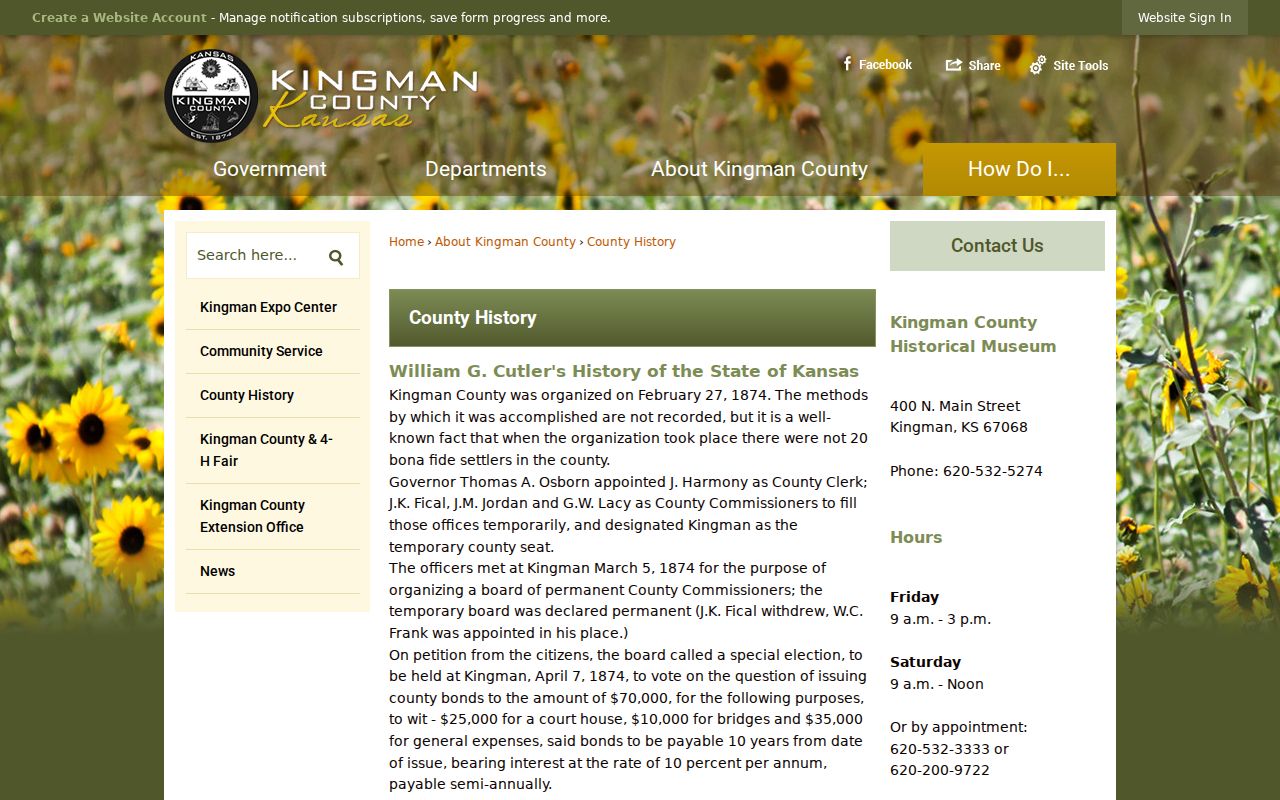
Keep publication dates apart from recording dates. Every newspaper clue should graduate into a deed-book or office index request. That discipline adds context without dressing up a news item as title evidence.
Kingman County Plat Changes
Replats, supplementary plats, vacations, and refrontage labels all reshape how a tract is described. A current GIS map polygon cannot prove past lot geometry. Pull the recorded plat. Cite the description used in each row of the deed chain. Ask whether plats and surveys sit in their own index series. The county publishes no full historic plat catalog. So assume nothing is online, and never treat a present tax label as a plat date.
Correction Deeds Preserve Earlier Owners
A clean parcel card on a portal erases nothing. Name errors, acknowledgment problems, legal-description mistakes, and bad recording references still live in the record. The county FAQ is clear. An old deed cannot simply be changed, so a new instrument is required. Search both directions around a suspect recording for a correction or re-recorded deed. Link each correction to the original instrument it cites. Note what changed and what stayed intact. A correction may fix one element without conveying the property again. It should not automatically become a new former-owner row in your Kingman County property records. Where the legal effect is unclear, keep the documents together. Ask a Kansas title professional to interpret them.
Portal Changes Do Not Erase Deeds
Kingman County's Appraiser has been shifting to a newer CAMA portal. Local reporting in 2025 also covered county technology and record-handling talks involving the Register. A visitor may therefore hit changed credentials. The host may differ. Or a public-user postback may appear. None of that means a deed was lost or altered.
Keep notes that hold up. Record the URL and the access date. Record the displayed database timestamp and the query terms too. Keep the courthouse phone and mailing route beside the portal note. If a web entry fails, fall back on the office index and the identified-copy process. A missing screen is not a missing record.
Log Each Kingman County Transfer
A Kingman County chain audits cleanly when every transfer gets its own row. Log the instrument date and the recording date separately. Signing and filing rarely land on the same day. Each row should carry grantor, grantee, deed type, legal description, book and page or instrument number, and the source consulted. When a plat, a probate case, or a correction explains a link, cite that record beside the deed. Do not replace the deed reference with it.
State uncertainty in plain words. "No match in this index under this spelling" is a search result, not proof a transfer never happened. Work the name variants. Try direct and inverted directions, exact addition terms, and rural section, township, and range. A parcel card's last-sale field stays a lead until the recorded instrument itself is checked.
The Register's FAQ lists a certified-copy charge. Fees can change, so confirm before ordering. Certification verifies the copy as the office's record. It does not substitute for a complete title examination.
Kingman County's Unknown Record Floor
No reviewed source pins down Kingman County's record floor. The first deed book, the earliest land-record date, any imaging cutover, and any courthouse-loss chronology all remain open questions. Ask the Register where the direct and inverted index volumes begin. Also ask whether they end there. Ask, too, whether older deeds, plats, and surveys sit in separate series.
Use records with care. Kingman County former-owner research supports house history and property diligence. Never use names or addresses to stalk, harass, target, or harm anyone.
Coverage begins with the earliest deed on file. A portal's update stamp is not the floor. Neither is the first roll of library microfilm. Those dates mark access, not the record itself. They say nothing about what the county's property records actually hold.
A title gap is a different problem. A parcel's chain of ownership can break. A disputed interest can surface. Either way, a Kansas title company or attorney can trace it by tract. The deed records route shows how to request one known instrument.